
A Developmentally Appropriate Halloween: What Does Halloween Look Like in Early Childhood?
從想像力、語言學習與文化體驗,談台灣幼兒園如何設計有意義的萬聖節活動。
Exploring how imagination, language learning, and cultural experiences help create a meaningful Halloween celebration in Taiwan’s early childhood context.
每年十月,世界各地的幼兒園與教保員都會思考同樣的問題:「我們要慶祝萬聖節嗎?如果要,該怎麼做才對孩子有意義?」乍看之下,萬聖節似乎只是個穿上服裝、拿糖果的活動日。
但若從 適性發展實施(Developmentally Appropriate Practice, DAP) 的角度來看,它其實是一個能讓孩子透過想像、文化與連結來學習的寶貴機會——前提是,我們以專業且有意識的方式來引導。
Each October, early childhood educators around the world might ask themselves: Should we celebrate Halloween? And if so, how can it be meaningful for young children?
At first glance, Halloween may seem like a day of costumes and candy.
But from a Developmentally Appropriate Practice (DAP) perspective, it’s an opportunity for children to learn through imagination, culture, and connection — when guided thoughtfully.
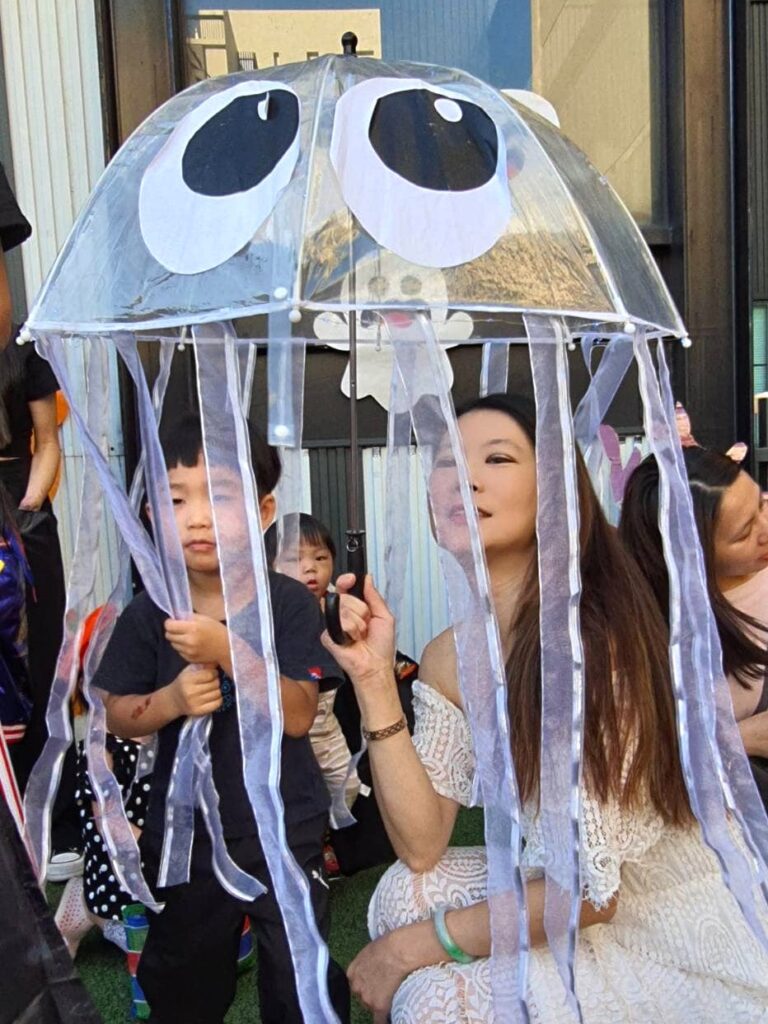
用 DAP 的觀點看萬聖節
Seeing Halloween Through the Lens of DAP
根據美國幼兒教育協會 NAEYC(National Association for the Education of Young Children) 的文章 〈Is Dressing Up for Halloween Different Than for Pretend Play?〉 所指出,所謂的「發展適宜性教學」(Developmentally Appropriate Practice, DAP) 是指依據孩子的發展階段、個別差異與文化背景,提供適切的學習經驗。
對幼兒而言,「遊戲」就是他們學習的方式。當孩子穿上角色服裝、假扮成別人、發揮想像時,他們不只是「玩」——他們正在發展語言能力、解決問題的思維、社交技巧與同理心。
我們相信,只要設計得當,萬聖節活動也能符合這些教育原則。焦點不該放在「驚嚇」或「比賽」,而是讓孩子透過想像、故事與自我表達來體驗節日的樂趣。讓孩子擁有選擇的權利:他們想成為誰、如何打扮、甚至是否參與,能培養自信與創造力。
In its article “Is Dressing Up for Halloween Different Than for Pretend Play?”, the National Association for the Education of Young Children (NAEYC) reminds educators that pretend play is how young children make sense of their world.When they dress up or take on new roles, they’re not just playing — they’re developing language, empathy, problem-solving, and creativity.
With thoughtful guidance, Halloween can nurture these same skills in a developmentally appropriate way.
幼兒需要「驚奇」但不需要「驚嚇」
Wonder, Not Fear: Keeping Halloween Safe for Young Children
另一篇 NAEYC 的文章 〈What’s Too Scary?〉 提醒我們,幼兒對「假裝」與「真實」的界線仍在發展中。對成人來說只是好玩的「小恐怖」,對孩子而言卻可能是令人焦慮的真實體驗。
因此,教育者在設計萬聖節活動時應該營造「驚奇而非驚嚇」的氛圍。透過幽默、想像與溫馨的故事,而不是恐怖或血腥的畫面,孩子能在安全的環境中探索勇氣與情緒。適度的神秘能激發好奇心,過度的恐懼則會壓抑學習動機。
在天堂鳥,我們相信,一個好的萬聖節活動應該讓孩子:
- 感到安全並能自由選擇參與;
- 在探索中獲得樂趣與勇氣;
- 在理解「這只是遊戲」的過程中學會情緒調節。
Another NAEYC article, “What’s Too Scary?”, emphasizes that young children experience fear differently from adults. They’re still learning to distinguish between “real” and “pretend,” and what feels funny or exciting to an adult may genuinely frighten them.
That’s why a developmentally appropriate Halloween should focus on wonder, not fear. By highlighting humor, fantasy, and imagination instead of darkness or horror, educators can create an atmosphere where children feel safe to explore.
A little mystery can inspire curiosity; too much fear can stifle it. At Tanni, we believe the best celebrations are those that allow children to:
- feel safe and choose their own level of participation,
- experience excitement and courage in a secure environment, and
- learn to manage emotions through guided pretend play
為什麼在台灣慶祝萬聖節?
Why Celebrate Halloween in Taiwan?
萬聖節雖然不是台灣的傳統節日,但在雙語與國際教育的脈絡下,它具有深刻的學習價值。對正在學英語的孩子來說,語言若能與文化相連,就能變得真實且有意義。
透過萬聖節的故事、歌曲與遊戲,孩子自然地在情境中接觸英語;不再是背單字,而是在生活中使用語言:
- “Trick or treat!”
- “Guess what I am!”
- “Don’t cross the road yet. The light is red!”
這些句子蘊含著情緒、社交互動與文化意涵。當孩子理解為什麼人們雕南瓜、為什麼會裝扮成不同角色時,他們同時也在學習文化的多樣性與創造力的展現。
我們相信,學習他人的文化,不會削弱自己的文化認同,反而能擴展孩子對世界的理解與包容。
Though Halloween isn’t part of Taiwan’s traditional culture, it offers valuable opportunities for cultural and language learning. For bilingual learners, language becomes most meaningful when connected to culture and lived experience.
Through Halloween stories, songs, and games, children use English naturally — not memorizing, but communicating:
- “Trick or treat!”
- “Guess what I am!”
- “Don’t cross the road yet. The light is red!”
These phrases blend emotion, interaction, and context. When children learn why people carve pumpkins or wear costumes, they gain a deeper understanding of creativity and diversity.
Learning about other cultures doesn’t replace one’s own — it broadens perspective and nurtures empathy.
教育的整合性:主題 × 安全 × 節慶
Integrating Learning: Themes, Safety, and Celebration
在幼兒教育中,我們常思考——學習應該是連結的,而不是分離的。教育不該被拆分成「語言課」、「藝術課」、「安全課」……孩子學得最深刻的時候,是當他們能把經驗、語言與情境連結在一起時。以尤麗卡幼兒園本學期的主題 「交通運輸(Transportation)」 為例,我們不將萬聖節視為獨立活動,而是讓它成為主題延伸的一部分——結合道路安全、交通常識與角色想像,讓孩子在扮演與探索中自然學習。
例如:
- 當孩子打扮成交通警察、紅綠燈或司機時,他們同時學習了安全規則與社會責任。
- 當他們說出英語詞彙如 car、stop、crosswalk 時,是在真實脈絡中使用語言。
- 當他們練習「怎麼安全過馬路」或「協助他人」時,就是在把知識轉化為行動。
這樣的學習方式讓教育不只是分科,而是充滿關聯與意義。這正是讓學習變得真實、有價值的原因。
We believe education should connect rather than separate. Children learn most meaningfully when lessons, themes, and real life are integrated. This semester at Eureka Preschool, our theme is Transportation, so we’ve connected Halloween to road safety and community awareness.
For example:
- Dressing up as traffic lights, police officers, or drivers helps children learn safety rules and responsibility.
- Using words like car, stop, and crosswalk reinforces English vocabulary in authentic ways.
- Pretend play about crossing the street safely helps children turn abstract knowledge into lived understanding.
Education that connects ideas and experiences becomes more authentic and purposeful — that’s what makes learning meaningful and important.
結語
In Conclusion
萬聖節,若由有意識的教育者帶領,就不僅是一場服裝派對,而是一個能培養孩子想像力、語言能力、文化理解與人際連結的契機。當學習在主題與經驗之間自然串連時,孩子不只是「記得」所學——他們真正地「活出」學習。
若您想了解更多,歡迎點此參考我們今年在尤麗卡幼兒園所設計的萬聖節活動:
👉 2025 尤麗卡幼兒園 Halloween 嘉年華
When guided by thoughtful educators, Halloween isn’t just a costume day — it’s an opportunity to nurture imagination, language, culture, and connection. And when learning is aligned across themes and experiences, children don’t just remember lessons — they live them.If you’d like to learn more about our upcoming Halloween activities, we invite you to click here:
👉 Eureka Preschool’s 2025 Halloween Event